Matthew Ross, the now-former managing editor of Filmmaker Magazine, has left for LA to pursue his own filmmaking career. Jason Guerrasio is Filmmaker's new managing editor. As a sort of tribute, here is a piece I wrote about Mr. Ross last year:
The managing editor of Filmmaker Magazine sits amid the steady hum of computers in his spacious but windowless office, having just completed work on the spring issue of “the magazine of independent film,” three months in the making.
Matthew Ross, 30, has been the managing editor of Filmmaker since he joined the magazine in 2003. He is one of only two staff editors at a magazine that reaches over 60,000 readers each issue, many of whom are filmmakers themselves.
As managing editor, Ross oversees all production, content and photo shoots; acts as chief contact for the magazine’s editorial staff, writers, publisher, designer and advertising director; represents the magazine at film industry events and film festivals; and, of course, writes features and reports for the magazine.
“While we’re in production, which takes place about three weeks every three months,” Ross says, “I’m sort of like the assistant director or production manager of the magazine. The rest of the time, I’m finding stories for us to cover.”
Born and raised in Manhattan, Ross attended Harvard University, where he studied film production and graduated in 1998 with a Bachelor of Arts degree in Visual and Environmental Studies. Like many of his colleagues at the magazine, Ross is also an aspiring filmmaker. His short film Curtis and Clover premiered at the 2001 Hamptons International Film Festival, where it was nominated for the Golden Starfish Award. He recently completed another short film, Lola, which should hit the festival circuit later this year.
Ross sees his career in journalism as part of a balancing act, a way to pay the bills while he simultaneously works on his career as a filmmaker.
“Writing and directing movies is never a hirable job at the start,” Ross says. “I’ve always loved writing – especially writing about movies. Writing about movies was the one thing I knew could do right off the bat.”
Immediately after graduation, Ross went to Los Angeles, where he briefly worked for Dimension Films and Miramax Films and found freelance production work on various documentaries. But, he says, “I wanted something more intellectually stimulating. I kind of fell into journalism by accident.”
Ross wrote for several online publications during the dot com boom, including Directors World, EditorsNet and 2-pop. Less than a year later, however, the boom went bust and he found a job at Variety.
He returned to New York as a staff film reporter, but says now that even though he loved working for Variety, he “didn’t want to be a business reporter.” Ross left Variety in January of 2002 and soon began working for indieWIRE Publications, where he was senior editor, overseeing all editorial content.
He left indieWire at the end of 2002 and began working for Filmmaker shortly thereafter.
“It was time to leave,” he says. “I was always a huge fan of Filmmaker. Plus, a quarterly magazine offered a more flexible schedule.”
While at Filmmaker, Ross has continued to write freelance articles for Variety, the Village Voice, indieWire and the Criterion Collection, among other publications. He has written and will be directing his first feature film, Plays Well with Others, with Cynthia Nixon attached to star, and is already working on his second feature, a psychological thriller titled Frank & Lola.
“Filmmaker has been very good to me,” Ross says. “But my ultimate ambition is to make films.”
Showing posts with label Filmmaker Magazine. Show all posts
Showing posts with label Filmmaker Magazine. Show all posts
Tuesday, October 31, 2006

You Can't Make a Film on Your Own
“We were just starting out at the time, making short films, and we felt that there must be a better way to make a film than calling and begging people for help and money,” says producer Jess Search of the humble beginnings of Shooting People, the London-based online community of independent filmmakers. Search and fellow filmmaker Cath Le Couteur founded Shooting People in the U.K. in 1998, and the first U.S. branch launched in New York in 2004. The organization expanded to include Los Angeles and San Francisco on May 15 of this year.
Shooting People began as a free online network, with about 60 of Search and Le Couteur’s friends as its first members, but started charging membership fees three years ago. Search says that only about 30 percent of their members shifted to the pay model initially and that they have yet to make a profit in the U.K., but over time they were able to attract more new members and expand their services. Now there are over 29,000 “Shooters” in the U.K. and U.S., where for an annual fee of $40 members can find and develop scripts, cast and crew their films, and get advice from other Shooters throughout the filmmaking process.
“I was coming to New York a lot, so I knew it and I saw that there was a comparable indie scene there,” Search explains. “I was actually surprised there wasn’t already something like Shooting People in New York.” Los Angeles seemed liked the next logical step, and depending on the group’s success there Search and Le Couteur will consider taking Shooting People to more locations worldwide.
However, to be most useful Shooting People needs to be more than just a phantasmagoric network of e-mails and online message boards. To that end Ingrid Kopp, who is in charge of Shooting People in the U.S., has started to introduce programs similar to those offered to U.K. members - such as "Shooter socials" and guest speakers - to expand the group’s North American presence. And Shooting People’s Mobile Cinema, already an annual hit in the U.K., will soon launch in the U.S. on a two-week cross-country tour from New York to Los Angeles, stopping wherever they are called along the way to screen the best of their members’ short films.
“The idea of Shooting People is so simple,” Kopp says, “but it can go so far. There’s much more we can do.”
Search and Le Couteur have recently become as concerned with the challenges of independent film distribution as they are with its production. As a result, Shooting People recently launched Word of Mouth, its new DVD label, and released its first title Best v Best, a collection of international award-winning shorts available only in the UK. Word of Mouth will also release the upcoming DVD for Rupert Murray’s 2005 documentary Unknown White Male, which was co-produced by Search.
“We’re really proud of the model we’ve developed,” Search says. “Shooting People is self-sustaining, created by filmmakers for filmmakers.”
For more information about Shooting People or to become a member, visit www.shootingpeople.org.
Shooting People began as a free online network, with about 60 of Search and Le Couteur’s friends as its first members, but started charging membership fees three years ago. Search says that only about 30 percent of their members shifted to the pay model initially and that they have yet to make a profit in the U.K., but over time they were able to attract more new members and expand their services. Now there are over 29,000 “Shooters” in the U.K. and U.S., where for an annual fee of $40 members can find and develop scripts, cast and crew their films, and get advice from other Shooters throughout the filmmaking process.
“I was coming to New York a lot, so I knew it and I saw that there was a comparable indie scene there,” Search explains. “I was actually surprised there wasn’t already something like Shooting People in New York.” Los Angeles seemed liked the next logical step, and depending on the group’s success there Search and Le Couteur will consider taking Shooting People to more locations worldwide.
However, to be most useful Shooting People needs to be more than just a phantasmagoric network of e-mails and online message boards. To that end Ingrid Kopp, who is in charge of Shooting People in the U.S., has started to introduce programs similar to those offered to U.K. members - such as "Shooter socials" and guest speakers - to expand the group’s North American presence. And Shooting People’s Mobile Cinema, already an annual hit in the U.K., will soon launch in the U.S. on a two-week cross-country tour from New York to Los Angeles, stopping wherever they are called along the way to screen the best of their members’ short films.
“The idea of Shooting People is so simple,” Kopp says, “but it can go so far. There’s much more we can do.”
Search and Le Couteur have recently become as concerned with the challenges of independent film distribution as they are with its production. As a result, Shooting People recently launched Word of Mouth, its new DVD label, and released its first title Best v Best, a collection of international award-winning shorts available only in the UK. Word of Mouth will also release the upcoming DVD for Rupert Murray’s 2005 documentary Unknown White Male, which was co-produced by Search.
“We’re really proud of the model we’ve developed,” Search says. “Shooting People is self-sustaining, created by filmmakers for filmmakers.”
For more information about Shooting People or to become a member, visit www.shootingpeople.org.
Thursday, October 12, 2006
Janus Films Retrospective
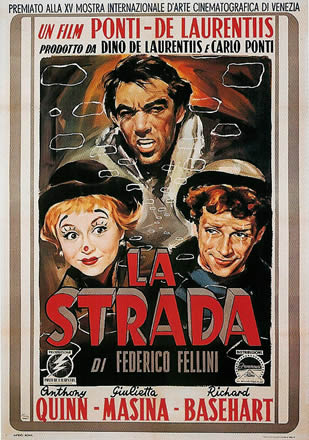 Published in the Summer 2006 issue of Filmmaker Magazine:
This year’s Retrospective at the New York Film Festival will celebrate “50 Years of Janus Films,” a collaboration among the NYFF, Janus Films and Criterion. From Italian neo-realism and the French New Wave to Japanese samurai epics and films filled with existential inquiries, the festival will showcase more than 30 world cinema classics, all of them screening in pristine new prints at the Walter Reade Theater.
“Anybody who saw these movies years ago was used to seeing them in spliced and scratched 16mm prints,” says Film Society of Lincoln Center Associate Director of Programming and retrospective curator Kent Jones. “That’s just the way things were. Now, the standards have changed and we are proud to be able to show [the films] in new prints on the big screen. It’s going to look spectacular.”
The retrospective will take place from September 30 to October 27, opening with Jean Renoir’s 1939 masterful portrait of the French bourgeoisie The Rules of the Game. Other screenings will include Jean Cocteau’s Beauty and the Beast (1946), Akira Kurosawa’s Seven Samurai (1954), Federico Fellini’s La Strada (1954), Ingmar Bergman’s The Seventh Seal (1957), Michelangelo Antonioni’s Eclipse (1962), Roman Polanski’s Knife in the Water (1962) and François Truffaut’s The 400 Blows (1959), among others.
Janus Films was once synonymous with bringing the best foreign feature films to American theaters, but the prevalence of DVDs and home theater systems has in many ways diminished the art house circuit on which Janus based its reputation. “50 Years of Janus Films” hopes to reintroduce audiences to the distributor’s canon of films in the manner in which they were always meant to be experienced, in pristine 35mm.
The New York Film Festival celebrates its 44th anniversary in 2006. The 17-day noncompetitive festival, which runs from September 29 through October 15, takes place at Alice Tully Hall and the Walter Reade Theater at Lincoln Center.

Close Captioned
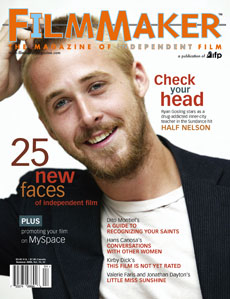 Published in the Summer 2006 issue of Filmmaker Magazine:
So you’ve always wanted to watch those old Superman cartoons of the 1940s, but you’ve just been waiting for the Serbian translation? Always complained about how not enough American documentaries can be seen in your native Dutch or Tibetan? Crossed your fingers hoping that your music video could be understood in Japanese, Portuguese and Romanian?
There may finally be a solution.
dotSUB is a new online web browser-based tool that renders text in real time onto moving images as subtitles in, conceivably, any language on Earth (even including Esperanto). Anyone who is bi-lingual can register and voluntarily begin translating available films using time captured transcriptions. dotSUB is currently in its second beta version and will officially launch this fall, when the software will be available to embed as an API on any site free of charge, so people all over the world can begin translating any available online video libraries.
At this stage, which clips are subtitled into which languages is up to the translators, not the filmmakers or dotSUB itself. Any film in any language can be hosted on the site free of charge and translated into multiple languages by obtaining permission from the film’s rights holders to create a derivative work.
“We’re focused on the 99.5 percent of filmmakers who don’t have the multi-million dollar budget to translate and subtitle their films,” says dotSUB founder and CEO Michael Smolens. “We want to allow people from any culture to watch the films of any other culture.”
The next goal for dotSUB is to facilitate distribution of the final subtitled films - which can be delivered in web-based streaming video, DVD, or VHS formats – in theaters, on public TV or cable TV channels in all countries, to cell phone carriers interested in local language content, and directly to end users, in the end hopefully reaching a much broader audience than was ever possible before.
Visit http://www.dotsub.com for more information and to watch subtitled films.
The 12 Disciples of Nelson Mandela
Published in the Summer 2006 issue of Filmmaker Magazine:
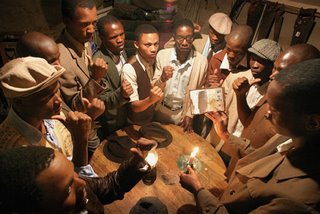
After the death of his stepfather, artist and filmmaker Thomas Allen Harris searches for a greater understanding of the life of the man he could never call “father” in the documentary The Twelve Disciples of Nelson Mandela. Pule Benjamin Leinaeng, known as Lee to his friends and family, was one of the first wave of South African exiles who left his home country in 1960 to fight apartheid, eventually leading him to the Bronx and into Harris’ family.
The search for information about Lee’s past leads Harris to a photograph of the “Bloemfontein Twelve,” a group of South African students, including Lee, who joined together to keep the anti-apartheid movement alive from East Africa, Europe, America and Cuba. Harris seeks out the surviving members, who called them themselves the Disciples of Nelson Mandela, and mixes interviews with dramatic reenactments of their adventures to create a unique journey into the life of a mysterious man.
Harris’ film is thematically similar to the 2003 doc My Architect, director Nathaniel Kahn’s critically acclaimed effort to learn about the deceased father he barely knew. In both films, father and son reach a posthumous reconciliation after conversations with friends, family and colleagues reveal a man much more complex and conflicted than either son could have realized. But whereas Kahn’s film frames his father’s life within his career as an architect, Harris uses the surviving disciples to learn not only about his father, but also about his cultural history.
“The Twelve Disciples of Nelson Mandela is a story about family and displacement,” Harris says. “A son's relationship to a father, and a father's relationship to a fatherland. I wanted to reconnect with Lee by way of the men who were bonded to him by a common political, historical and emotional journey. It was only in the process of making this film that I realized just how much I was his son.”
The Twelve Disciples of Nelson Mandela had its broadcast premiere on the PBS documentary series P.O.V. on Tuesday, September 19. The film is a co-production of the Independent Television Service (ITVS), in association with American Documentary/P.O.V. and the National Black Programming Consortium.

Subscribe to:
Posts (Atom)